

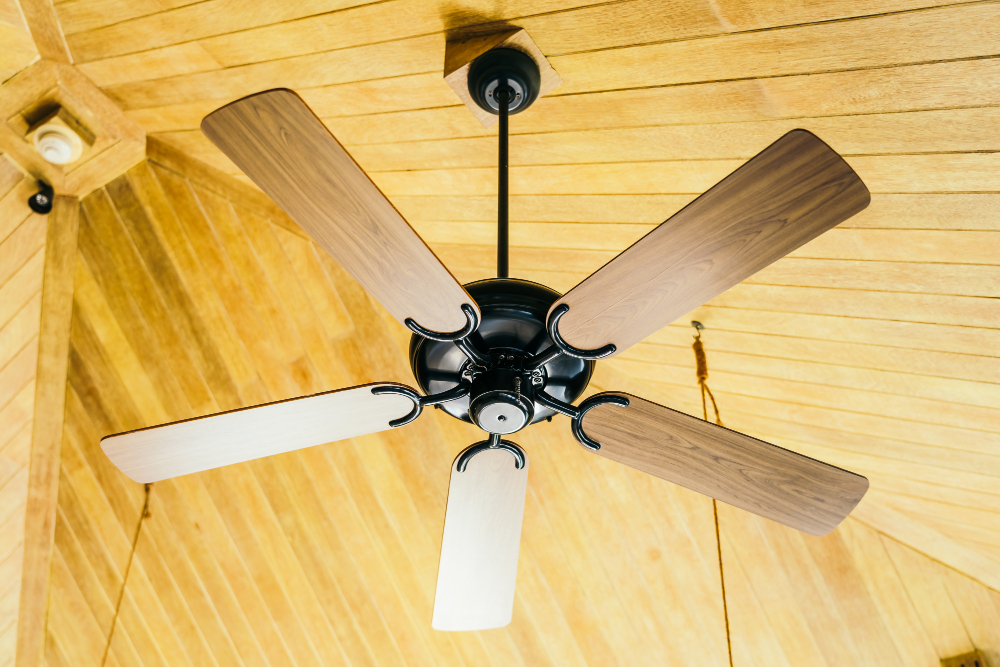
Adelaide summers don’t ask permission. One week you’re enjoying a pleasant 28 degrees, the next the forecast says 41 and your bedroom feels like a bakery. That’s usually when a ceiling fan goes from “nice idea” to “why didn’t I do this sooner?” But here’s the catch I see all the time. A fan that wobbles like a dodgy shopping trolley wheel, or clicks all night, is worse than no fan at all.
I’ve spent enough time around switchboards and ceiling cavities to know that most fan problems start long before anyone flips the switch. They start with the ceiling fan installation itself. Get it right and you’ll enjoy a quiet, steady breeze for a decade. Get it wrong and you’ve bought yourself a pendulum with ambition.
This guide covers what young Adelaide professionals need to know about ceiling fan installation Adelaide homes and apartments actually require. We’ll look at why fans wobble, what makes them noisy, how to fix common issues, and when it’s time to call a licensed electrician.
Why Ceiling Fan Installation Matters More Than the Fan You Buy
Here’s the uncomfortable truth: a premium fan on a dodgy mount will perform worse than a budget fan installed properly. Ceiling fan installation is a lot like hanging a big TV on the wall. The shiny screen gets all the attention, but the bracket behind the plasterboard decides whether the whole thing stays put. A spinning fan carries weight, vibration and constant motion, so the support it hangs from has to be far stronger than the one holding a standard light fitting.
So what is ceiling fan installation, exactly? It’s the process of securing a fan to a properly rated structural support in your ceiling, connecting it through safe ceiling fan wiring, balancing the blades and testing it at every speed. Done properly, it takes a few hours. Done badly, it also takes a few hours, and then it haunts you at 2 am with a rhythmic click-click-click.
Most wobbling and noise complaints I hear about trace back to three things: a weak mounting point, rushed wiring, or blades that were never balanced. Notice that none of those are the fan’s fault. That’s why a careful ceiling fan installation beats a fancy model every time, and why it’s worth treating the job as electrical work rather than a weekend experiment.
What Causes a Wobbling Ceiling Fan?
A little sway at top speed can be normal, especially with a long down-rod. A proper wobble, where the canopy shakes and your light fitting rattles, is not. Wobbling ceiling fan repair is much easier once you know which of three usual suspects you’re dealing with.
Loose Mounts and Weak Ceiling Support
Many Adelaide homes, especially older bluestone villas and 1970s brick builds, have ceilings that were never designed with fans in mind. A light fitting weighs almost nothing, so the old fixing might only be screwed into plasterboard or a thin batten. A fan needs a fan-rated bracket fixed into a joist or a purpose-built support brace. If a previous ceiling fan installation skipped this step, vibration slowly loosens everything, and the wobble gets worse month by month.
Unbalanced or Warped Blades
Blades are the next suspect. Heat and humidity can warp timber or MDF blades slightly, and even a few grams of difference between blades throws the whole fan off. Dust doesn’t help either, because a thick layer on one blade acts like a tiny weight. Most fans ship with a balancing kit, and a good installer uses it as part of every ceiling fan installation rather than leaving it in the box.
Down-Rod and Canopy Problems
Long down-rods amplify movement. Think of a fishing rod: a tiny shake at the handle becomes a big swing at the tip. If your ceiling sits at 2.4 metres, a long rod isn’t a style choice, it’s a clearance problem. A low-profile “hugger” mount is usually the smarter pick. Loose set screws on the rod or canopy also cause that classic rattle.
In short, wobbling ceiling fan repair usually starts with the mount, moves to the blades, and finishes with the rod and canopy. If you can’t find the cause after a safe visual check, stop and call a professional.
Why Is Your Ceiling Fan Noisy? Common Culprits and Noisy Ceiling Fan Solutions
Noise is a different beast from wobble, though the two often travel together. The sound itself is a useful clue. A hum or buzz usually points to the electronics, often a standard light dimmer being used as a fan speed controller. Dimmers and fan motors don’t get along, and the result is a buzz that sounds like a trapped wasp. A fan-rated controller solves it.
A clicking sound normally means something is loose or touching. It could be a blade screw, a blade iron or a slightly warped blade tapping the housing. A grinding or scraping sound is more serious and often means worn bearings, which are more common in older or cheaper AC motors. Poor ceiling fan installation is behind more noise complaints than faulty motors ever are, so always check the basics first.
| Sound | Likely cause | Typical fix |
| Humming or buzzing | Wrong controller or dimmer | Fit a fan-rated controller |
| Clicking or ticking | Loose blade screws or warped blade | Tighten, rebalance or replace blade |
| Rattling at speed | Loose canopy or down-rod screws | Secure all fixings |
| Grinding | Worn motor bearings | Replace fan (call an electrician) |
The best noisy ceiling fan solutions are boring ones: tighten every screw, check blade brackets, use the right controller and make sure the fan hangs level. If the noise survives all that, the motor is probably the problem, and that’s a job for a licensed electrician rather than a can of WD-40. Spraying lubricant into a sealed motor is like putting sunscreen on a wet towel. It feels productive and achieves nothing.
Ceiling Fan Installation Adelaide: What a Proper Job Actually Involves
When I walk through a ceiling fan installation Adelaide customers book with us, I follow the same sequence every single time. It isn’t glamorous, but it’s the difference between a fan that runs quietly for years and one that ends up on Facebook Marketplace with the caption “barely used”. The order matters because each step protects the next one, and skipping ahead is where most mistakes sneak in. Here’s the rough flow:
- Check ceiling height, joist position and what’s in the roof space
- Isolate the power at the switchboard and test that the circuit is dead
- Fit a fan-rated bracket or brace into solid structure
- Complete the ceiling fan wiring to the supply, controller and any light
- Assemble the fan, balance the blades and tighten every screw to spec
- Test at every speed and check for wobble, noise and correct direction
Height is the other thing people forget. Blades should sit at least 2.1 metres above the floor, and ideally a little more if you’ve got tall housemates or a loft bed. A well-planned ceiling fan installation also considers where the airflow lands. A fan blasting directly onto your work-from-home desk sounds great until your papers start migrating across the room.
Do You Need a Licensed Electrician Adelaide Homes Can Trust?
Short answer: yes. In South Australia, connecting a fan to your home’s fixed wiring is regulated electrical work. DIY attempts aren’t just risky for you, they can also cause problems with insurance and resale. A licensed electrician Adelaide households rely on will carry the right qualifications, test the circuit properly and know what the wiring behind an older ceiling is likely to look like. Before you hire anyone, you can check an electrician’s licence with Consumer and Business Services SA, which takes about a minute and saves a world of regret.
I’ll be honest, this is where I see good intentions go sideways. Someone watches a video, buys a fan, and swaps it in on a Saturday. It looks fine until the first hot week, when the fan starts swaying and the light fitting starts rattling. A proper ceiling fan installation is as much about what you can’t see as what you can: the support, the connections, the earthing and the testing. Hiring a pro isn’t about laziness, it’s about avoiding a fan on your head. (That’s a joke, but only barely.)
Choosing the Right Fan: Energy-Efficient Ceiling Fans and DC Models
Not all fans are created equal, and the cheapest one isn’t always the cheapest to own. Energy-efficient ceiling fans, particularly DC models, can run on a fraction of the power of traditional AC motors. Over an Adelaide summer, when you might run a fan for eight to ten hours a day, that difference adds up. DC fans also tend to be quieter and offer more speed settings, which suits light sleepers and anyone working from home.
DC ceiling fan installation is similar to a standard job, but it usually involves a remote or wall control with a receiver, so correct wiring and pairing matter. A rushed DC ceiling fan installation can lead to flickering lights or unresponsive controls, so it’s worth having someone who has done a few of them.
| Feature | AC ceiling fan | DC ceiling fan |
| Running cost | Higher | Noticeably lower |
| Noise level | Can hum over time | Typically very quiet |
| Speed settings | Usually 3 | Often 5 to 6 |
| Upfront price | Lower | Higher |
| Typical lifespan | Good | Often longer |
A quick tip that doubles as an AEO-friendly answer: fans cool people, not rooms. They move air across your skin so you feel cooler, so switch them off when you leave. In summer, run the blades anticlockwise for a breeze. In winter, a reverse setting on low pushes warm air back down from the ceiling.
Ceiling Fan With Light, Replacement and Outdoor Setups
Not every job is the same, and the details change depending on where the fan is going.
Ceiling Fan With Light Installation
A ceiling fan with light installation needs extra wiring and often a separate switch or controller, so the light and fan can be operated independently. Weight matters too, since a fan plus fitting adds load to the mount. This type of ceiling fan installation also needs compatible globes. Many fans are sold with LED-ready kits, and using incompatible bulbs can cause flicker or heat build-up.
Ceiling Fan Replacement Adelaide
Ceiling fan replacement Adelaide homeowners ask about is usually about swapping an old, noisy unit for something sleeker. It sounds simple, but old mounts and tired wiring often need upgrading. A replacement isn’t a shortcut around modern ceiling fan installation standards. If the old fan wobbled, the cause is often still sitting in the ceiling waiting to annoy the new one.
Outdoor Ceiling Fan Installation
Outdoor ceiling fan installation is a different game entirely. Alfresco areas, covered patios and verandahs need fans rated for damp or wet conditions, with corrosion-resistant fittings. If you’re near the coast, say Glenelg or Henley, salt air will chew through the wrong materials quickly. A properly planned outdoor ceiling fan installation uses the right rating, weatherproof wiring and a secure mount that handles breeze as well as spin.
Wobbling Ceiling Fan Repair: A Quick, Safe Checklist
Before you panic, a few simple checks can sometimes solve a mild wobble. Always switch the fan off at the wall and the switchboard, let it come to a complete stop, and use a sturdy ladder with someone steadying it. Don’t touch any wiring, and if something looks scorched, loose or cracked, stop immediately. These checks are only about the visible, mechanical parts. Think of this as basic first aid, not surgery, and treat it that way.
- Tighten blade screws and blade iron screws gently
- Check that each blade sits at the same height using a ruler
- Wipe each blade evenly, since uneven dust throws off balance
- Use the balancing kit supplied with the fan
- Check the canopy and down-rod screws for looseness
If the fan still wobbles after those steps, the problem is likely in the mount or the structure above it. That part of the ceiling fan installation sits behind plasterboard, and it’s no place for guesswork. That’s when I’d book a licensed electrician rather than keep tweaking.
What Affects the Price of Ceiling Fan Installation?
People always ask for a flat price, and I get why. But the real cost of ceiling fan installation depends on a handful of practical factors. Roof access matters, since a tight roof space takes more time. Ceiling height and type matter too, because raked or high ceilings need extra equipment. Then there’s the existing wiring: if there’s already a light point, the job is simpler, but if we have to run new cabling, it takes longer.
The number of fans and whether you’re adding a light or a wall controller also change the quote. Sensible electricians will assess the site before they commit to a number, and be wary of rock-bottom prices that don’t mention the mounting. A cheap ceiling fan installation that skips proper support is a bit like a cheap parachute. It’s a fun idea until you need it to work.
When Is the Best Time to Book Ceiling Fan Installation in Adelaide?
Spring is the sweet spot. Once the first serious heatwave hits, electricians get slammed, and everyone suddenly wants a fan by Friday. Booking your ceiling fan installation early gives you more choice of fans, more flexible time slots and zero stress. It also means your bedroom is ready before the first 40-degree night, which, if you’ve ever tried sleeping through one, you’ll know is worth planning for.
Why Hybrid Electrical?
At Hybrid Electrical, we focus on doing the unglamorous parts of the job properly: solid mounting, tidy ceiling fan wiring, balanced blades and a full test before we leave. Our licensed electricians work with homeowners, renters and landlords across Adelaide, and we’ll tell you honestly if the fan you’ve picked isn’t the right fit for your space.
Conclusion
A great ceiling fan installation is less about the fan and more about what happens behind the ceiling. Secure mounts, correct wiring, balanced blades and the right controller are what keep a fan quiet and steady. Wobbling usually comes from weak support, warped blades or long down-rods, while noise comes from loose parts, mismatched controllers or worn motors. Whether you’re after energy-efficient ceiling fans, a DC model, a ceiling fan with light, a replacement or an outdoor setup, hiring a licensed electrician is the smartest move you can make.
If you’re ready for a cooler, quieter summer, get in touch with Hybrid Electrical today. Whether you need a brand-new ceiling fan installation or a wobbling ceiling fan repair, our team will make it clean, safe and done right the first time. Call us or send an enquiry to book your ceiling fan installation, and let’s get your home ready before the heat arrives.
Frequently Asked Questions
How long does ceiling fan installation take?
A straightforward ceiling fan installation where there’s already a light point usually takes a couple of hours. If we need to add support, run new wiring or install a ceiling fan with light, it can take longer. Roof access and ceiling type also make a difference, so we always give you a realistic timeframe after looking at the space.
Can I install a ceiling fan myself in Adelaide?
You can assemble parts of a fan yourself, but connecting it to your home’s fixed wiring is regulated electrical work in South Australia and needs a licensed electrician. Beyond the legal side, a proper ceiling fan installation also involves structural support and testing that most DIY attempts overlook, which is why wobbling and noise are so common afterwards.
Why is my new ceiling fan wobbling?
The most common cause is poor ceiling fan installation, usually a weak mount or unbalanced blades. Warped blades, loose screws and long down-rods can also contribute. Try tightening blade and canopy screws and using the balancing kit, and if it persists, book a professional for wobbling ceiling fan repair rather than letting it shake loose over time.
Are DC ceiling fans worth it?
For most Adelaide households, yes. DC fans use less electricity, run more quietly and offer more speed options, which is handy during long summers. DC ceiling fan installation costs a little more upfront, but the lower running costs and quieter operation usually make up for it, especially if you run the fan daily.
Can you replace my old fan with a new one?
Absolutely. Ceiling fan replacement Adelaide homeowners request is one of our most common jobs. We check that the existing mount and wiring are suitable, upgrade them if they’re not, and balance the new fan properly so you don’t inherit the old one’s problems.