

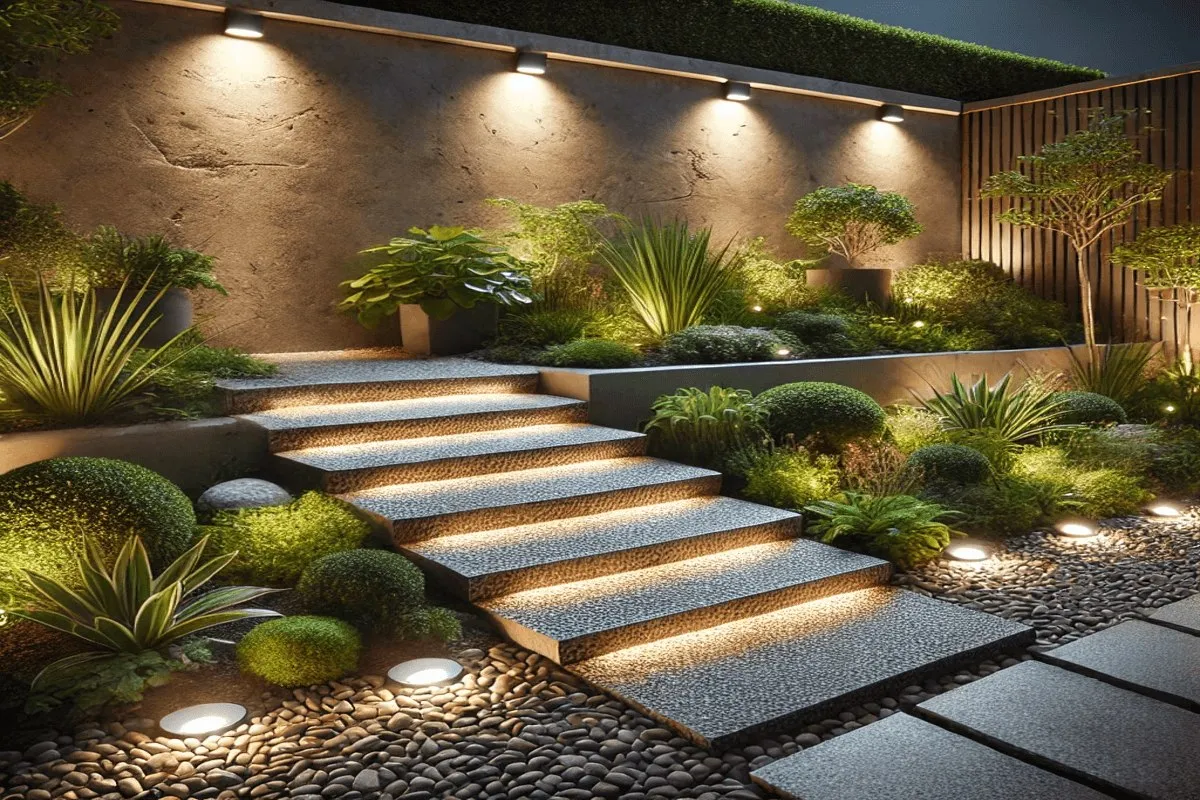
Picture this: it’s 8pm in your Adelaide backyard, and the darkness is rolling in. Suddenly, a line of warm garden lights flicks on, guiding you safely along the patio like a friendly pair of night-vision goggles. Landscape Lighting Installation can turn a dark garden into an evening haven and – just as importantly – keep you and your guests from tripping over that rogue garden gnome. In sunny Adelaide, where we love al fresco dinners and late-night barbies, well-planned outdoor lighting extends the fun and wards off danger. In this guide, we’ll walk through why landscape lighting installation in Adelaide is a smart investment: the safety benefits, popular design options, and key tips for doing it right (Adelaide style).
Why Landscape Lighting Installation Matters
Think of landscape lighting as a set of superpowers for your backyard. Not only does it jazz up the space, it also actively prevents accidents and deters intruders. Well-placed lights illuminate dark corners, make backyard steps visible, and even startle would-be thieves with sudden motion-sensor action. As one local lighting expert puts it, “Safety improvements from outdoor lighting prevent accidents and deter criminals. Illuminated paths guide safe movement… Step lights prevent trips on level changes. Motion-activated security lighting startles intruders”. In other words, a little electricity investment can save you from a lot of worry (and maybe a trip to the ER after a stubbed toe!).
Landscape lighting isn’t just about safety, either. It transforms ordinary plants and patio furniture into a beautiful nightscape. In Adelaide’s winter (when it gets dark by 5pm), good lighting lets you enjoy your yard well after sunset. In the long summer evenings, it means the party doesn’t have to stop with dinner. It’s like giving your garden a wardrobe full of stylish evening outfits: path lights for function, uplights on trees for drama, and warm wall sconces for ambiance. All these elements blend safety, style and utility – a layered lighting design that “balances multiple objectives… creating depth and visual interest”. By extending your usable hours and preventing mishaps, professional landscape lighting installation pays for itself in enjoyment and peace of mind.
Types of Landscape Lighting Fixtures
Outdoor lighting comes in all shapes and sizes. Here are the most popular fixtures that Adelaide homes love:
- Pathway Lights: These lamp posts or low bollards line gardens and walkways. They gently cast light along a path, so you know exactly where to step after dark. (Think solar spike lights, mushroom-head lights, or classic Victorian post lights.) Proper spacing – usually 2–4 metres apart – creates a cozy rhythm along walkways. Path lights ensure you never lose the walkway’s edge, especially after a wine-fueled BBQ evening.
- Step and Stair Lights: Tiny recessed LEDs in stair risers or wall-mounted step lights ensure no one takes a misstep on stairs. Even flush-mounted “pizza box” lights on deck steps can make a huge safety difference. By lighting every step, these fixtures “prevent accidents from unexpected dark treads”. They’re subtle but hugely important for family safety.
- Uplights and Accent Lights: For drama and style, gardeners often place uplights at the base of trees, statues or architectural features. The beam shoots upwards, illuminating trunks and walls. This creates a theatrical effect – your gum tree looks like a Queensland checkers shadow puppet! Accent lights can also highlight garden art or water features. They’re about beauty, but by making focal points visible, they also prevent accidentally bumping into them at night.
- Downlights / Moonlights: Mounted high in trees or on eaves, downlights mimic natural moonlight by casting gentle illumination below. This produces soft, natural-looking pools of light over lawns or patios. Unlike uplights, downlights feel very organic – it’s like the stars came down for a visit. They can highlight outdoor dining areas or path edges with a subtle glow.
- Wall Wash and Deck Lights: These aim to softly illuminate larger areas. A well-placed wall wash light can uniformly light a fence or retaining wall, making the yard feel more open and secure. Deck lights (on rails or under joists) light entertainment zones so no one pours a drink on the floor out of fear.
- Security and Flood Lights: For raw security, motion-activated floodlights are the go-to. Bright LEDs sweep across backyards or driveways when triggered. They surprise potential intruders (and alert the family). In Adelaide, a combination of LED floodlights and smart sensors is popular because the LED lights “have long lifespan, low running costs, and reliable performance” through our hot summers.
By mixing these fixture types, you create a layered lighting scheme. Good landscape lighting designers avoid two pitfalls: too much light and too little. As one pro notes, “Overlighting creates harsh environments… Underlighting leaves areas dark and potentially dangerous”. The sweet spot is a blend of safe pathway lights, cozy accent lights, and strategic security lights – all done in warm tones for comfort.
These fixture choices let you tailor your garden’s look and function. For example, pathway lighting gives safety by clearly defining walking routes. “Bollard-style lights” might line the driveway, while smaller garden lights dot flowerbeds for atmosphere. The key is planning: map out where people walk and play, then pick lights accordingly (much like a lighting version of planning seating at a dinner party!).
Designing Ambience with Wildlife-Friendly Lighting
Outdoor lighting isn’t just a “flip a switch and forget it” job. You’ll want to design with both humans and local wildlife in mind (kangaroos, birds, possums – they’re watching too!). Thankfully, the Australian Government’s National Light Pollution Guidelines give us a head start. For example, they recommend using adaptive controls (like dimmers and motion sensors) so lights are on only when needed. They also advise low-intensity lights kept close to the ground and avoiding high-blue or white spectra (stick to warm amber tones). In practice, that means: use LED lights at 2700–3000K (a cozy warm white) instead of bright cool-white, point fixtures downwards, and install shields or louvers to focus light only where you want it.
By following these tips, your new landscape lighting won’t turn the neighborhood into an impromptu spaceship runway. It will protect nocturnal wildlife (like owls and insects) and keep neighbors happy. For example, the guidelines note that using amber (low-CCT) lights “helps animals too”. At the same time, adaptive timers and motion triggers ensure you’re not blasting the spotlight 24/7 – which saves energy and money.
Other design best-practices: layer your lighting for versatility. Use separate circuits or switches for different zones (e.g., entertaining area vs. security lights), and include dimmers so you can mellow out the brightness for a romantic night. Think in terms of “use and need” – only light what’s necessary. If a spot is purely decorative (like highlighting a statue), consider a lower-power accent light rather than a blinding floodlight.
Outdoor lighting installation tips: Always bury or conceal cables carefully, use IP-rated (weatherproof) fixtures, and keep power sources protected. If you have areas near water (pools, ponds), ensure lights are rated IP65 or higher and have ground-fault protection. You wouldn’t run undersea cabling without care – and the same goes for your pond lights. A good electrician will know to place your transformer in a dry, vented spot and keep wiring well out of reach.
By planning thoughtfully and using the government’s 6 principles (only light what you need, use the right color and intensity, and incorporate sensors), you end up with an inviting space that’s also nature-friendly and efficient. It’s not just about seeing – it’s about experiencing your garden safely after sunset.
LED Lighting and Smart Controls
Thanks to modern LED technology, landscape lighting is more eco-friendly and versatile than ever. LEDs consume about 80–90% less energy than old-school halogen bulbs and last for tens of thousands of hours. That means your outdoor lights can run year-round without frequent bulb changes or massive power bills. For example, a warm-white (around 3000K) LED path light will sip electricity and can glow night after night for years.
With LEDs, you also get precision. You can choose very specific color temperatures: a soft 2700K for an intimate mood, or a crisp 4000K for a bright security effect. In Adelaide, many homeowners prefer the warm glow (2700–3000K) for gardens – it feels relaxed and inviting on a cool evening. Just avoid anything too blue (above 5000K) unless you’re lighting a warehouse! And quality matters: look for LEDs with a high CRI (color rendering index) so your flower colors still pop under the light.
Smart controls are another game-changer. Timers, dusk-to-dawn sensors, and smartphone apps mean your lights come on only when needed. You can set your garden to gently ramp up brightness at dusk, turn off in the middle of the night, or react only when motion is detected. This not only saves power but adds security (a sudden light can surprise a prowler). Remember, the government guidelines encourage these adaptive controls.
Outdoor lighting installation in Adelaide often includes daylight sensors on simple path lights or smart hubs for integrated systems. For instance, you might have a row of LED bollards that switch on automatically at twilight, plus a motion sensor on your deck lights to turn them fully bright when you step outside. The result is a system that feels almost alive – it knows when and how to light up. And thanks to LEDs’ durability, you won’t be changing lamps every season.
Finally, don’t neglect transformer and voltage choices. Low-voltage (12–24V) LED garden lights are popular for safety: the transformer just steps down your mains, reducing shock risk. Plus low-voltage wire can be trenched shallowly. Your electrician will size the transformer to handle all fixtures (and some extras for future additions), avoiding dimming or burnout. Good installations even use junction hubs and multiple circuits to manage voltage drop over long runs. This technical care means your driveway lamp glows as brightly as the one next to the transformer.
Professional Installation, Safety & Regulations
Here’s the bottom line: landscape lighting installation is electrical work, and in Adelaide it must be done by a licensed electrician. South Australian law and SafeWork SA guidelines are clear: “Electrical work must only be carried out by a competent and trained licensed electrician”. This isn’t just red tape. It’s about safety. A wrong wire, improper earthing, or missing RCD could turn your lovely lights into hazards.
Licensed electricians ensure everything is compliant with the AS/NZS 3000 wiring rules and local electrical codes. This includes protecting circuits with RCD (safety switches) – especially important outdoors where moisture is lurking. Professionals also use “direct burial” rated cable under soil, secure waterproof connectors, and mount transformers (voltage step-down boxes) in ventilated, protected spots.
A good example: if you want an outdoor power point for plugging in a decorative lamp or fountain, you can’t just run an indoor cable outside. You need a weatherproof outlet and cable installed safely. As Hybrid Electrical advises, “If you need an outdoor socket (say, for power tools or landscape lighting), get a licensed electrician to run an outdoor cable and install a weather-sealed outlet – it’s not something to dangle off an extension reel in the rain!”. That means GPOs in the garden must have proper covers and be on an RCD circuit – again, only a sparkie should do that.
Local regulations also touch on planning. In Adelaide suburbs, you usually don’t need council approval for standard security or garden lights on your property. (Just don’t floodlight the street or your neighbor’s yard without permission.) However, high-powered floodlights on poles or any lighting affecting public areas might require checks or a permit. Professional installers stay on top of these rules. They can even advise you on any council guidelines before work begins, making sure your dream lighting doesn’t become a bureaucratic nightmare.
Finally, any licensed electrical work in Adelaide must come with a Certificate of Compliance (an eCoC). This is your guarantee that it was done to code. Companies like Hybrid Electrical issue that after installation. It’s one more way to ensure your yard lighting is safe, reliable and fully legal – and it helps with home insurance in case of any weird flare-ups. Trusting the pros means you get the benefit of their training, experience, and peace of mind.
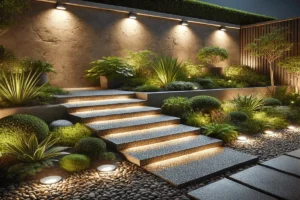
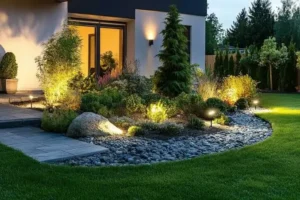
As you can see, the right installation is more than just hanging a lamp. It involves careful wiring, protective weatherproofing, and compliance checks. When done properly, your outdoor lighting installation runs like a silent sentinel – you barely notice the tech, only the safe glow.
How Much Does Landscape Lighting Installation Cost in Adelaide?
The cost of Landscape Lighting Installation in Adelaide can vary quite a bit, but you do not need a huge budget to make a noticeable difference. A basic outdoor lighting setup may start around $600–$1,500, while a small Landscape Lighting Installation with several garden and pathway lights can sit around $1,500–$3,500. Larger projects with multiple lighting zones, feature trees, entertaining areas and security lighting can move beyond $5,000. These figures are useful budgeting guides rather than fixed prices, as every outdoor lighting installation depends on the property, fittings, wiring and installation requirements.
| Project Type | Approx. Budget | Ideal For |
| Basic outdoor lighting | $600–$1,500 | A few pathway, garden or security lights |
| Small Landscape Lighting Installation | $1,500–$3,500 | Front garden, pathways and feature areas |
| Medium Landscape Lighting Installation | $2,500–$5,000 | Larger gardens with several lighting zones |
| Premium landscape lighting design | $5,000–$10,000+ | Detailed feature, entertaining and security lighting |
| Large whole-property project | $10,000–$15,000+ | Extensive front and backyard lighting |
Why Choose Hybrid Electrical in Adelaide
You might be wondering, “Who should I call for all this?” That’s where Hybrid Electrical shines. We’re Adelaide locals who live and breathe this stuff. We’ve installed hundreds of landscape lighting solutions across the city – from beachside Glenelg patios to hillside Adelaide Hills decks. We know Adelaide’s climate, local building codes, and design trends.
At Hybrid, we believe in clear communication. We’ll start by listening to how you actually use your outdoor spaces. Do you host late-night BBQs? Need a safe path to the pool at 10pm? We’ll map out your garden (paths, steps, patio, etc.) and propose lighting that fits your lifestyle – exactly like one Adelaide electrician describes: “We plan your landscape lighting around how you actually use your spaces, from quiet patios to feature trees… [with] sensors, timers and dimming, all explained in plain English”. Our goal is a calm, beautiful garden that feels safe for your family and guests every night.
We’re also sticklers for quality. We use high-grade LED fixtures with good IP ratings, and brand-name transformers that keep voltage stable. That means no flickering lights, no corroding connectors, and consistent brightness. Every installation includes proper earth bonding and RCD protection. We triple-test everything (no pun intended!) before we clean up and leave.
Beyond the tech, we know it’s about trust. We’re fully licensed and insured, and part of the National Electrical and Communications Association (NECA), so we stay up-to-date on safety and industry best-practices. When you book with Hybrid Electrical, you’re getting friendly local experts who treat your home like our own. We even handle all paperwork and compliance certificates, so you don’t have to worry.
In short: if you want a safe, stunning outdoor lighting makeover in Adelaide, you won’t find sparkier (sorry!) electricians around. We’ll guide you through design ideas, keep you informed every step, and deliver a system that looks amazing and works flawlessly.
Conclusion
Landscape lighting installation isn’t just a luxury upgrade – it’s a real boost for safety and enjoyment in Adelaide homes. By strategically placing LED garden lights, path lights, step lights and security lights, you illuminate potential hazards (like uneven steps or garden hoses) and make intruders think twice. You extend summer nights by hours and turn winter evenings into cosy retreats. The key takeaways: plan carefully, use the right fixtures, and follow the rules. Use warm-white LEDs on a well-thought-out design, keep lights shielded and near the ground, and incorporate timers or sensors. Above all, have a licensed electrician do the work. This ensures compliance with South Australian standards and keeps everyone safe. In short, a proper landscape lighting installation melds beauty, safety and peace of mind.
Ready to light up your life – and your home? Hybrid Electrical is here to help. Contact us today and let’s discuss how professional landscape lighting installation in Adelaide can transform your outdoor space. We’ll provide a free quote, answer all your questions, and install a system that’s both stunning and secure. Don’t leave your evenings and safety to chance; brighten them the right way with Hybrid Electrical by your side.
FAQs
Q: What exactly is landscape lighting installation?
A: Landscape Lighting Installation involves planning and installing outdoor lights such as pathway, garden, accent and security lighting to improve the appearance, usability and safety of your outdoor space.
Q: Do I need a licensed electrician for outdoor lighting?
A: Yes. Electrical work must be carried out by a competent, licensed electrician in South Australia. A professional can ensure your outdoor lighting installation is safely wired, tested and compliant with applicable requirements.
Q: How does landscape lighting improve outdoor safety?
A: Well-placed lighting reduces dark areas, makes paths and steps easier to see, and improves visibility around driveways, entrances and entertaining areas. Motion-sensor security lighting can also provide an added layer of deterrence.
Q: What lights work best for Adelaide gardens?
A: A combination usually works best. Pathway lighting can guide foot traffic, LED garden lights can highlight plants and features, while motion-sensor security lights can brighten driveways and darker areas. Warm-white LEDs are also popular for a comfortable, inviting look.
Q: What affects the cost of outdoor lighting installation?
A: Cost depends on the number and type of fixtures, cable runs, access, controls and the complexity of the landscape lighting design. A professional assessment from Hybrid Electrical can help you choose an option that suits both your property and budget.