

Stepping out of an Adelaide shower only to find your ceiling streaked with watermarks? Or sniffing the lingering scent of last night’s curry in the kitchen air? Without proper airflow, homes can trap steam and odours like a corked bottle. Exhaust fan installation is the key to flushing out that humid air before it turns your walls green. In this guide, we’ll walk through why ventilation matters in Australian homes, the types of fans for bathrooms, kitchens and laundries, and how to install them safely – all tailored to Adelaide’s unique housing styles and climate. By the end, you’ll know exactly how to keep your Adelaide home dry, mould-free and pleasantly fresh.
Why Ventilation Matters: Moisture, Mould and Air Quality
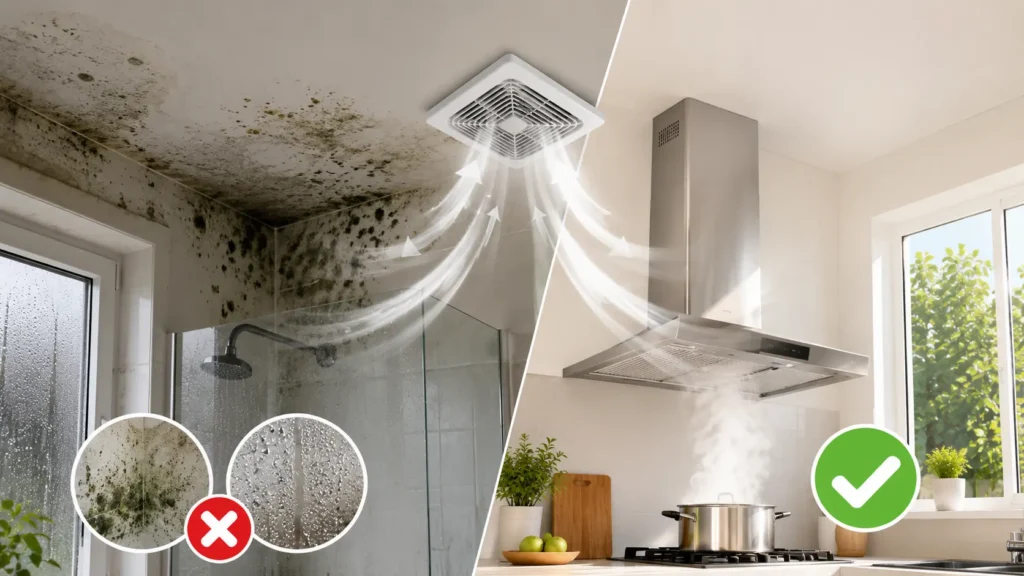
Modern homes rely on well-planned ducts and exhausts to channel moist air outside. Without them, humidity builds up indoors. Even in Adelaide’s mild climate, everyday activities (steamy showers, boiling pasta, even drying clothes) pump moisture into the air. Without ventilation, that moisture condenses on walls and ceilings, creating the perfect breeding ground for mould. As SA Health notes, “The most effective method of reducing moisture is to use exhaust fans in areas where water vapour is created”. In other words, installing an exhaust fan is like giving your home a dehumidifier that automatically kicks in when you shower or cook.
Lack of airflow doesn’t just harm walls – it affects you too. The Australian NCC (Building Code) points out that “without proper airflow, moisture builds up, leading to mould growth and condensation issues… and unhealthy conditions for occupants”. A Victoria health report echoes this: “Mould grows best in damp, poorly ventilated areas and reproduces by making spores… to control indoor mould growth, control the source of moisture”. In short, good ventilation (like a bathroom or kitchen fan) is the cheapest, easiest way to cut humidity and keep mould at bay.
Adelaide’s twist? Our Mediterranean climate means winter showers and closed-up houses. Sparky.fyi notes that even here, “bathroom ventilation is still required by the NCC where natural ventilation is inadequate. Winter is when problems surface: homes are closed up, showering creates condensation, and without extraction, moisture accumulates on ceilings and walls”. The result can be sneaky roof-cavity mould, peeling paint or musty smells. The takeaway: don’t be lulled by Adelaide’s generally dry air – install proper exhaust fans to prevent moisture and mould.
Exhaust Fan Types and Where to Use Them
Whether wall-mounted or ceiling-mounted, exhaust fans pull moist air directly out of wet rooms. Above is a typical round wall exhaust vent. Modern homes have different fans for different jobs. Choosing the right exhaust fan installation depends on the room and usage. Here are the common types:
- Bathroom Exhaust Fans: These are the classic compact fans you see in shower or toilet ceilings. A bathroom fan should be rated at about 25 L/s (litres per second) or more to clear steam from showers. They’re usually ceiling-mounted to suck up humid air right above the shower. If the ceiling can’t vent straight up, a wall fan (above a window or on an outside wall) is used. In either case, ducting must lead outdoors – never dump bathroom air into an attic or wall cavity. Installing a bathroom exhaust fan Adelaide style means following the NCC: at least 25 L/s exhaust flow and a 10-minute run-on timer after use.
- Kitchen Exhaust Fans (Rangehoods): Cooking releases steam, grease and odours. A properly installed range hood or kitchen fan vents this directly outside. For gas cooktops, code actually requires an externally ducted hood. Most Adelaide homes use a ceiling-hung or wall-mounted rangehood. Ceiling-mounted rangehoods (with ducts running up through the roof) and wall rangehoods (venting straight out a side wall) are both common. Fans here should be powerful – typically at least 40 L/s – to clear cooking fumes. A good kitchen exhaust fan installation in Adelaide often means custom-fitting ductwork through brick or stone walls, which can be tricky (our inner suburbs have bluestone walls 300–450mm thick).
- Laundry Exhaust Fans: Wet laundry or clothes dryers can dump a lot of moisture in the air. A laundry exhaust fan (often inline or ceiling-mounted) can extract steam from clothes dryers or the general laundry area. If you use a venting dryer, code mandates a duct all the way outside. Even without a dryer, using a fan or venting the laundry area (through a roof or wall vent) prevents humidity buildup. In older homes with no window, adding a laundry fan is one of the simplest home ventilation solutions to reduce mould risk.
- Ceiling vs Wall vs Inline Fans: In tight spaces, you might hear of inline or remote fans. These have the motor placed away (e.g. in a roof space) with a grille in the bathroom. They run quieter and can serve multiple vents. Wall-mounted fans simply cut through an exterior wall – easier install if you share a wall outdoors. Ceiling fans (common in bathrooms) vent straight up through the roof. Roof-mounted fans (small whirlybird-style or powered vents) can also be used, especially for large attic extractions, but modern practice is to install fans directly in each wet room for targeted airflow.
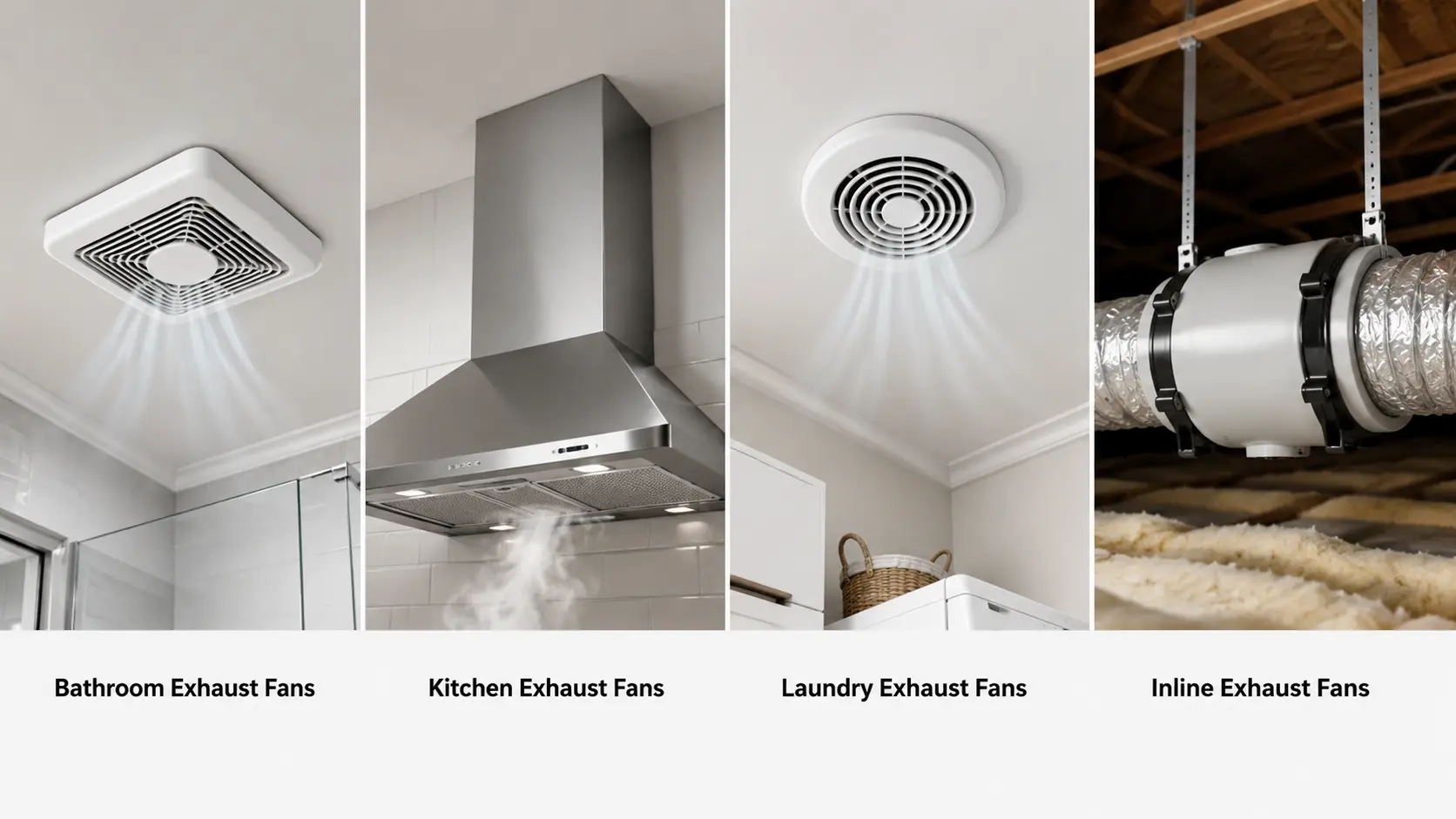
Each type has its niche, but the rule is the same: duct it outside. Whether it’s a round wall exhaust in a bathroom or a sleek kitchen rangehood, the goal is to whisk moist air into the open air. These ventilation fixtures – bathroom, kitchen, laundry exhaust fans – form the backbone of any home’s moisture control system.
Installation Considerations: Code, Safety and Adelaide Specifics
Installing an exhaust fan involves more than cutting a hole in the ceiling. Australian regulations (NCC 2022) spell out exactly how it’s done. NCC Part 10.8 (Condensation Management) – an official government guideline – mandates that “exhaust from a kitchen, bathroom, sanitary compartment or laundry must discharge directly or via a shaft or duct to outdoor air”. In practice, that means you can’t just route your bathroom fan into the roof cavity or another room: it must vent to the outside world.
The code even specifies flow rates: at least 25 L/s for bathrooms and 40 L/s for kitchens and laundries. And if your bathroom has no openable window, the fan must be wired to the light switch (and include a 10-minute run-on timer after you turn it off). For exact details see NCC Part 10.8 – Condensation Management.
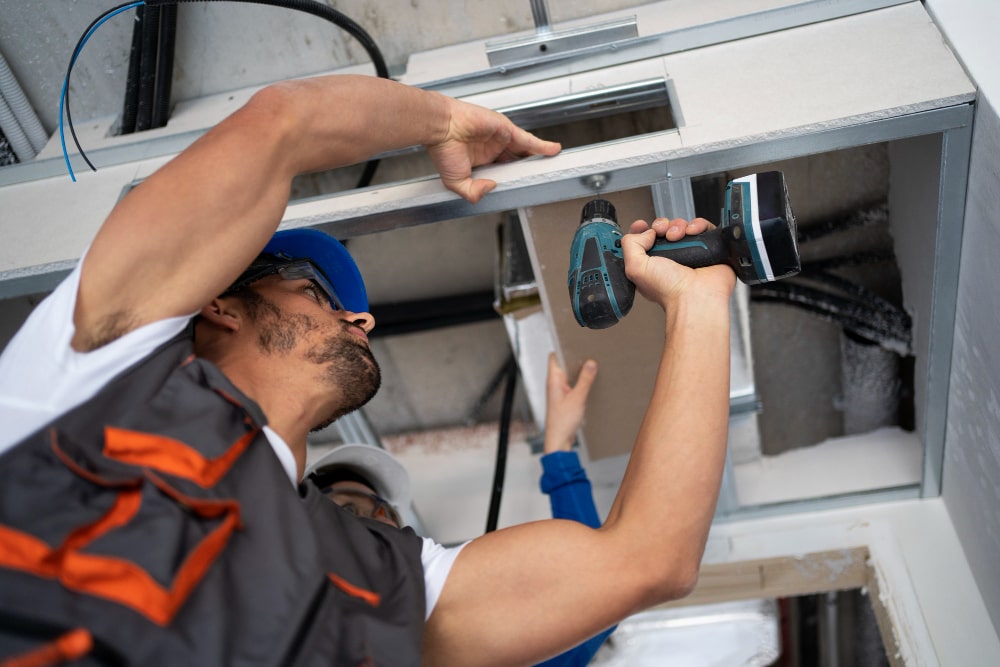
In short: all exhaust fan installations must meet the building code. Practically, this means hiring a licensed electrician. They’ll handle electrical connections under AS/NZS 3000 (“Wiring Rules”), ensure your home’s switchboard can feed the fan, and install any safety devices (like RCDs). They’ll also plan the ducting path – cutting through walls or roofs (with weatherproof seals) – so the fan truly vents outside. And yes, in Adelaide you’ll want a local who understands our houses. Many inner-city cottages have thick bluestone or sandstone walls. Drilling through 300–400mm solid stone is specialist work (and can cost more), so a skilled tradesperson is a must.
One Adelaide-specific tip: check heritage regulations. In heritage districts (e.g. Norwood, Unley, North Adelaide), councils often require discrete vent covers that match the period look, and may limit visible ductwork. Sometimes installers will route the duct through the roof instead of a street-facing wall to hide it.
Safety-wise, vents must be secure. If you have a venting clothes dryer, the NCC even says “it must discharge directly or via a shaft or duct to outdoor air” (no dumping dryer air in the roof either). Any kitchen rangehood on a gas stove also must be exhausted outside by law. For running costs: exhaust fans use far less electricity than air conditioners, but they still need a proper switch (often with a timer module as code suggests).
Practical steps: A qualified electrician will typically:
(1) determine the best location (usually near the moisture source);
(2) cut and mount the fan housing or grille;
(3) run and seal the ducting to a roof cowl or wall vent;
(4) connect it to power (often tied into the bathroom light circuit);
(5) test airflow.
They’ll check the installation against NCC rules and AS1668.2 ventilation standards. The electrician can also advise on fan capacity (sometimes higher than the minimum 25 L/s for busy bathrooms) and features (like built-in timers or humidity sensors). Attempting this as a DIY can lead to leaks or code violations – always best to hire a licensed electrician (Adelaide) for safe, compliant installation.
Also remember maintenance: if you’re replacing an old fan, you might get away with using existing wiring and ducting, which cuts cost. But in vintage Adelaide homes, many bathrooms had no fans at all – so you’re doing a full retrofit: ceiling cut, new duct to roof, new switch wiring. All of that adds to labour time. Sparky.fyi notes Adelaide labour rates run about 10–15% above eastern cities.
Speaking of cost, the caveat installation factors include wall material (stone vs brick vs timber) and roof access (steep or tile roofs take longer). If your current setup exhausts into the roof (some older houses did this), expect to reroute it outside – because Australian code prohibits dumping wet air into ceiling cavities. In fact, Sparky warns that old “fans venting into the roof” can cause hidden mould and insulation damage over time. So doing it right now saves headaches later.
Finally, verify your new fan’s performance. Ideally you’d see air flowing out of the roof vent or grille when it’s on. A good installer will test it for you. As Hybrid Electrical (an Adelaide electrician) emphasizes, they always test and commission each fan to ensure it’s working efficiently. That step is crucial – after all, even a perfect fan does no good if the duct is blocked or the flow is weak.
Energy Efficiency and Smart Upgrades
Installation isn’t just about code – it’s an opportunity to upgrade your home’s comfort and efficiency. Today’s exhaust fans are smarter and thriftier than grandma’s old noiseless box. For starters, many come with DC motors or multi-speed settings to save power. In fact, as Hybrid Electrical notes, “Fans use less energy compared to air conditioners, making them a more sustainable choice”. Replacing a 20-year-old fan with a modern energy-efficient model can cut your electricity use for ventilation by a third or more.
Many exhaust fans now offer extra features: built-in LED lighting, heating lamps for chilly mornings, or integrated timers and humidity sensors. For instance, the popular IXL Tastic 3-in-1 (heater/fan/light) runs about $550 and keeps a bathroom cozy on a cold Adelaide winter morning. There are even DC fans with remote controls or wireless humidity triggers, so the fan only runs when it senses moisture. When installing, consider one of these combo units in bathrooms or laundries – they provide lighting or warmth exactly when you need it, while managing humidity all day.
Adelaide’s climate also lends itself to solar ventilation. The Sparky guide mentions “Solar-powered roof vents (like Solar Whiz) [which] are particularly effective in Adelaide’s long, sunny summers”. A rooftop solar ventilator runs any time the sun shines, drawing out air at 700–2,100 m³/hr without using grid power. While that’s an extra gadget beyond a standard fan, it’s a great supplement if you want passive, continuous ventilation (especially in unsealed roofs or roof spaces).
You can also think bigger: whole-house Heat Recovery Ventilation (HRV) or Energy Recovery Ventilation (ERV) systems bring fresh filtered air into living spaces while pre-warming or pre-cooling it. These aren’t exhaust fans per se, but they work with them to balance airflow. NCC 2022 even recommends HRV/ERV for high-efficiency homes. If you’re doing a major renovation or building new, ask about HRV as part of your home ventilation solutions.
Even on a smaller scale, simple upgrades help: cleaning or replacing dust-clogged grille covers, swapping old fans for ones with insulated casings, or adding a switch-timer to ensure your fan runs a few minutes after showering. In short, ventilation upgrades can pay dividends. Your Adelaide home will dry faster after each shower, and you’ll see fewer mould spots or damp smells. So when planning your exhaust fan installation, consider investing in the extra features and efficiencies. It keeps indoor air quality high (a definite win for comfort) while controlling energy costs.
Conclusion
In summary, exhaust fan installation in Adelaide homes is a smart defense against moisture and mould. By directing steam and damp air outside, a properly installed fan keeps bathrooms, kitchens and laundries dry and odour-free. We covered the different fan options (bathroom ceiling fans, kitchen rangehoods, laundry vents and more) and why each spot needs one. We also stressed the importance of compliance: Australian building codes (like NCC Part 10.8) demand your exhaust fans vent outdoors and meet minimum airflow rates. Beyond health and comfort, good ventilation helps protect your paint, timber and fixtures from moisture damage in the long run.
If your home has any wet areas without proper extraction, now’s the time to act. A licensed electrician (like those at Hybrid Electrical) will install or replace your fans safely and correctly. We offer residential exhaust fan installation Adelaide clients tailored advice on choosing the right fan capacity and location. In short: keep those humid vapors outside! Install your fans, enjoy fresher indoor air, and wave goodbye to mouldy surprises.
Ready to upgrade your home’s airflow? Hybrid Electrical is here to help. Whether you need a new exhaust fan installation, an upgrade to an energy-efficient model, or exhaust fan repair, our licensed electricians in Adelaide have you covered. Don’t wait for mould to move in – call us for expert advice and a free quote. Let’s keep your Adelaide home comfortable, healthy and dry with professional exhaust fan installation solutions!
FAQs
Q: Why should I install an exhaust fan in my bathroom or kitchen?
A: Exhaust fan installation removes excess moisture, steam, and odours, helping prevent mould, condensation, and poor indoor air quality. It’s an effective way to protect your home and improve ventilation.
Q: Do I need an exhaust fan in Adelaide?
A: Yes. If natural ventilation isn’t sufficient, exhaust fan installation is recommended to meet Australian building requirements and maintain a healthier, moisture-free indoor environment.
Q: How do I choose the right exhaust fan?
A: The right exhaust fan installation depends on your room size, airflow needs, and location. A licensed electrician can recommend the best ceiling, wall, or inline fan for your home.
Q: Should I hire a professional for exhaust fan installation?
A: Yes. Professional exhaust fan installation ensures safe electrical connections, correct ventilation, and compliance with Australian Standards and the National Construction Code.
Q: How much does exhaust fan installation cost in Adelaide?
A: The cost of exhaust fan installation in Adelaide varies depending on the fan type, ducting requirements, and installation complexity. A professional quote provides the most accurate pricing.